Helping middle grade students develop strong writing skills can feel overwhelming. Between managing classroom dynamics, addressing diverse learning needs, and nurturing creativity, educators and parents often wonder where to start. The good news is that a structured, flexible writing process makes all the difference. When you break down storytelling into clear, manageable steps, you empower young writers to build confidence and skill. This guide walks you through evidence-based strategies to support middle grade writers from brainstorming their first ideas through publishing polished stories.
Table of Contents
- Key takeaways
- Understanding the writing process for middle grade students
- Implementing effective strategies for diverse learners
- Practical steps for educators and parents to support middle grade writers
- Common challenges and how to overcome them in the middle grade writing process
- Explore middle grade storytelling with Pafel Dubois
- Frequently asked questions
Key Takeaways
| Point | Details |
|---|---|
| Structured five stage process | A clear five stage approach including prewriting drafting revising editing and publishing helps middle grade writers build confidence and skill. |
| Planning reduces blank page panic | Prewriting uses the FTAP strategy to analyze prompts and create outlines that organize ideas, reducing blank page anxiety. |
| Chunk tasks for focus | Breaking large writing tasks into smaller steps like drafting introductions and developing body paragraphs helps students stay motivated and on track. |
| Conferencing and feedback | Regular one on one or small group conferences and peer discussions reveal thinking guide improvements and build writing skills. |
| Five paragraph backbone | The core structure for middle grade writing centers on an introduction with hook and thesis three body paragraphs a conclusion and smooth transitions. |
Understanding the writing process for middle grade students
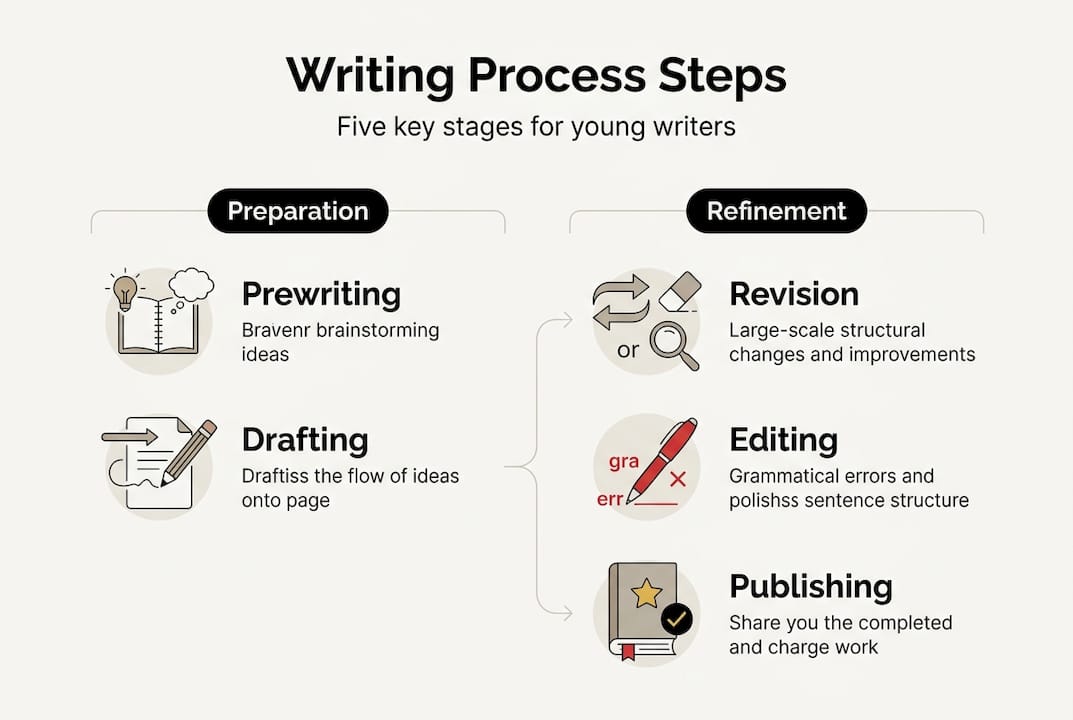
Middle grade writers thrive when they follow a clear roadmap. The writing process for ages 8-12 includes five essential stages: prewriting, drafting, revising, editing, and publishing. Each stage serves a specific purpose, building on the previous one to create polished, engaging stories.
Prewriting lays the foundation. Students brainstorm ideas, use the FTAP strategy to analyze prompts, and create outlines that organize their thoughts. This planning prevents the blank-page panic many young writers experience. Drafting comes next, where students transform outlines into full paragraphs without worrying about perfection. The goal here is getting ideas down, not creating flawless prose.
Revision focuses on big-picture improvements. Students rework content, strengthen organization, and enhance storytelling elements like character development or argument structure. Editing follows, targeting grammar, spelling, and punctuation. Finally, publishing celebrates finished work through sharing, posting, or formal presentation. Reflection after publishing helps writers recognize growth and set new goals.
The five-paragraph structure works well for middle grade fiction and nonfiction. It provides enough framework to prevent aimless writing while allowing creative flexibility. Here are the core components:
- Introduction with hook and thesis
- Three body paragraphs developing main points
- Conclusion summarizing key ideas and providing closure
- Transitions connecting paragraphs smoothly
- Topic sentences guiding each paragraph's focus
Flexibility within this structure matters enormously. Some stories need more than five paragraphs. Others benefit from experimenting with different organizational patterns. The key is teaching the basic framework first, then encouraging students to adapt it as their skills grow.
Implementing effective strategies for diverse learners
Not all middle grade writers learn the same way. Tailoring your approach ensures every student can access the writing process successfully. Genre-based instruction using mentor texts helps students understand narrative, argumentative, and informative elements through concrete examples. When students see how published authors structure stories, they gain models to emulate.
Chunking large writing tasks prevents overwhelm. Instead of assigning a complete essay, break it into smaller pieces: today we draft the introduction, tomorrow we develop body paragraph one. This approach builds success and maintains motivation, especially for students who struggle with executive function or attention.
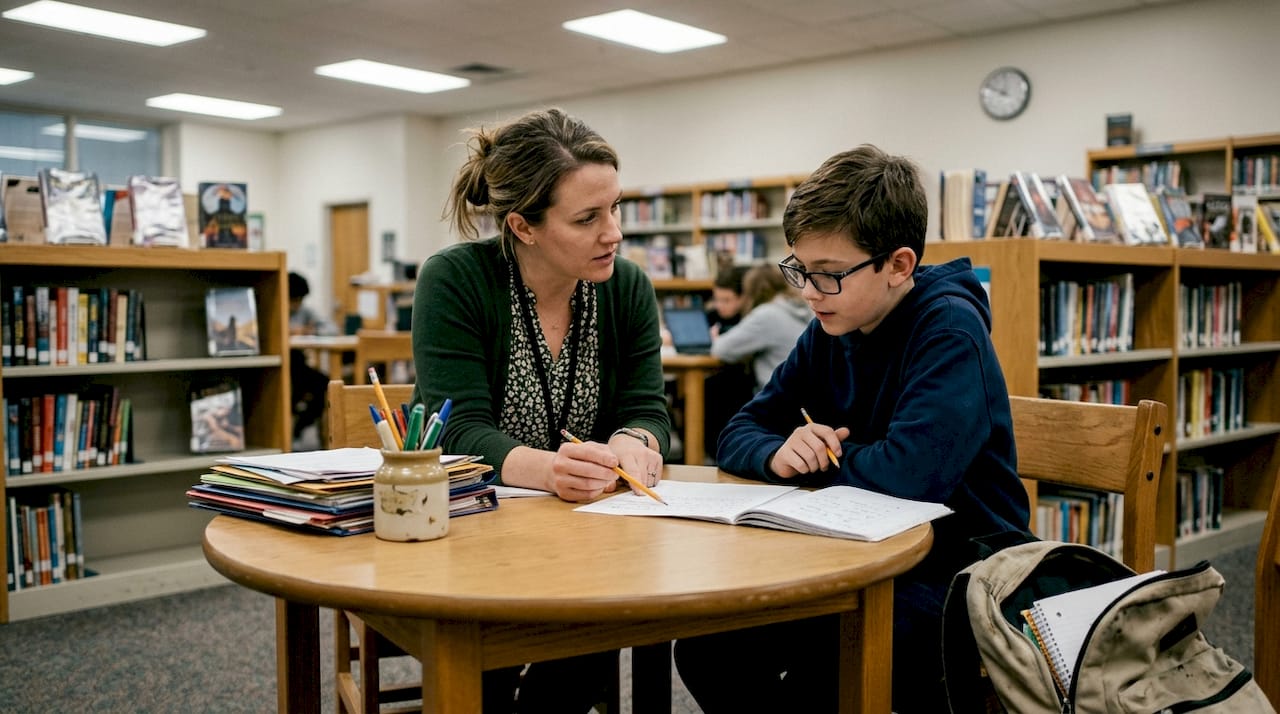
Regular conferencing transforms writing quality. Schedule brief one-on-one or small-group meetings where you discuss specific aspects of student work. Ask open-ended questions like "What part are you most proud of?" or "Where did you get stuck?" These conversations reveal thinking processes and guide targeted improvements. Peer discussions serve similar purposes, teaching students to give and receive constructive feedback.
SMART goals boost motivation and track progress. Help students set Specific, Measurable, Achievable, Relevant, and Time-bound writing objectives. Instead of "get better at writing," a SMART goal reads "write three complete sentences describing my character's appearance by Friday." Status-of-class checks, where you quickly survey what stage each student has reached, keep everyone accountable and help you identify who needs extra support.
Pro Tip: Create a visual writing process chart displaying all stages with checkboxes. Students move their name tags through stages as they progress, making the abstract process concrete and giving them ownership of their learning journey.
Students with learning disabilities need explicit scaffolds addressing multiple skill strands simultaneously. The Writing Rope framework breaks writing into foundational skills like transcription, sentence construction, and genre knowledge. English learners benefit from sentence frames, vocabulary banks, and opportunities to discuss ideas orally before writing. Novice writers must develop transcription skills first, building fluency in forming letters and spelling before tackling complex composition.
These strategies work best when layered together:
- Model writing processes through think-alouds
- Provide graphic organizers matching the assignment genre
- Offer word banks and sentence starters
- Allow extra time for planning and revising
- Use assistive technology when appropriate
- Celebrate small wins to build confidence
Practical steps for educators and parents to support middle grade writers
Transforming theory into practice requires concrete actions. Follow these steps to create an environment where middle grade writers flourish.
-
Establish daily protected writing time. Schedule 20 to 45 minutes when students write without interruption. Consistency builds stamina and signals that writing matters. At home, create a similar routine where children write in a dedicated space free from distractions.
-
Model reading aloud with expression. Reading middle grade books with varied pacing, character voices, and emotional tone shows students how language sounds when done well. This auditory modeling transfers directly to their writing voice and dialogue.
-
Use explicit prewriting activities. Teach the FTAP strategy: Form (what type of writing), Topic (what you're writing about), Audience (who will read it), Purpose (why you're writing). Students answer these questions before outlining, ensuring clarity from the start.
-
Guide drafting with targeted feedback. As students write, circulate and offer specific, actionable comments. Instead of "good job," try "your opening sentence hooks me because it starts with action." Focus feedback on one or two elements per draft to avoid overwhelming young writers.
-
Encourage multiple revision cycles. First revision addresses content and organization. Does the story make sense? Are ideas in logical order? Second revision tackles sentence-level improvements like word choice and variety. Final editing catches mechanical errors. Separating these stages prevents students from getting stuck perfecting grammar before their ideas are fully developed.
-
Publish and reflect for growth. Share finished work through class anthologies, bulletin boards, or digital platforms. Follow publication with reflection questions: What improved from your first draft? What will you try differently next time? This metacognition cements learning.
Pro Tip: Keep a writing portfolio for each student showing work from throughout the year. Reviewing early pieces alongside recent ones provides powerful evidence of growth that motivates continued effort.
Here's how writing skills typically progress across middle grade years:
| Grade level | Writing stamina | Typical output | Key skills |
|---|---|---|---|
| 4th grade | 30-40 minutes | 1-2 paragraphs | Basic sentence variety, simple organization |
| 5th grade | 45-60 minutes | 3-5 paragraphs | Developed narratives, clear thesis statements |
| 6th-7th grade | 60+ minutes | Multi-page pieces | Complex arguments, sophisticated vocabulary |
Common challenges and how to overcome them in the middle grade writing process
Even with strong instruction, obstacles arise. Recognizing and addressing them quickly keeps writers progressing.
Balancing explicit instruction with creative exploration challenges many educators. Research shows that blending approaches works best: teach foundational skills explicitly through modeling and guided practice, then provide opportunities for creative application. Students need the technical tools before they can experiment effectively. Think of it like learning an instrument. You practice scales and techniques, then improvise using those skills.
Writing anxiety and perfectionism paralyze some middle graders. They freeze at blank pages or erase repeatedly, never finishing drafts. Combat this by emphasizing process over product initially. Celebrate messy first drafts. Share your own imperfect writing and revision process. Normalize struggle as part of learning. Set time limits for drafting to prevent endless tweaking.
Students with reading or transcription difficulties face unique hurdles. Weak decoding skills limit vocabulary and sentence complexity. Poor handwriting or spelling slow output and drain cognitive resources. Address these through:
- Allowing typing or dictation software
- Providing high-frequency word lists
- Teaching keyboarding skills explicitly
- Breaking writing into shorter sessions
- Focusing first on ideas, then mechanics
Skipping revision or rushing to publishing undermines quality. Students often consider their first draft finished. Make revision mandatory by building it into your grading rubric. Provide revision checklists targeting specific improvements. Use peer review to show how feedback strengthens writing. When students see revision as refinement rather than criticism, resistance decreases.
Here's how different instructional approaches compare:
| Approach | Strengths | Limitations | Best use |
|---|---|---|---|
| Explicit instruction | Clear skill development, structured support | Can limit creativity if overused | Teaching new genres or struggling writers |
| Constructivist exploration | Fosters voice and engagement | May leave gaps in foundational skills | Experienced writers applying learned skills |
| Blended model | Combines technical skill with creative application | Requires careful planning and balance | Most middle grade classrooms |
Avoiding common pitfalls requires intentional planning. Don't assign writing without teaching the process first. Don't grade early drafts harshly, which discourages risk-taking. Don't skip conferencing, which provides irreplaceable individualized support. Don't forget to celebrate progress, which fuels motivation for continued growth.
Explore middle grade storytelling with Pafel Dubois
Inspiring young writers often starts with exposing them to compelling stories. When students see what's possible in middle grade literature, their own storytelling ambitions grow. Pafel Dubois creates exactly the kind of engaging narratives that spark imagination in young readers and writers.

His Spark Chase series delivers the adventure and found-family themes middle graders love, while demonstrating strong character development and pacing. Books like these serve as excellent mentor texts, showing students how authors craft hooks, build tension, and resolve conflicts. His Unnatural Selection explores AI themes relevant to today's students, connecting reading to real-world issues they're curious about. Exploring these resources connects your writing instruction to high-quality literature that motivates and informs young storytellers.
Frequently asked questions
How long should the writing process take for middle grade students?
Grade 5 students typically develop 45 to 60 minute writing stamina and grow narrative length progressively. The complete process from prewriting through publishing usually spans one to three weeks depending on the assignment's complexity. Daily practice builds both stamina and quality over months and years.
What if my student resists the writing process steps?
Resistance often signals that steps feel overwhelming or disconnected from the final goal. Break stages into even smaller chunks and show examples of how each step improves the finished piece. Let students occasionally skip formal prewriting for quick writes to maintain engagement, then return to the full process for major assignments.
How much feedback should I give on student drafts?
Limit feedback to two or three specific, actionable points per draft. Too much feedback overwhelms students and dilutes focus. Prioritize higher-order concerns like organization and development in early drafts, saving grammar and mechanics for final editing stages. Use questions rather than directives when possible to encourage student thinking.
Can younger or older students use this same writing process?
Absolutely. The five-stage process adapts across age ranges by adjusting complexity and support levels. Younger elementary students need more scaffolding and shorter writing sessions, while older middle schoolers handle longer pieces with less guidance. The core structure remains valuable because it mirrors how professional writers work.
How do I help students who struggle with revision?
Make revision concrete through specific tasks: add three descriptive words, combine two short sentences, replace one weak verb with a stronger one. Provide revision checklists and partner students for peer review. Show before and after examples of your own revised writing. When students see tangible improvements from small changes, revision becomes less abstract and more achievable.