
Many parents and educators assume middle grade literature is too simple to tackle complex themes or challenge young minds. The truth is that middle grade sci-fi combines fast-paced adventure with meaningful social commentary and educational content specifically designed for readers aged 10 to 14. This guide explains what defines middle grade literature, how sci-fi books in this category blend entertainment with learning, and why these stories matter for developing critical thinking in young readers.
Table of Contents
- Key takeaways
- Understanding the middle grade literature audience and scope
- How middle grade science fiction blends adventure, education, and social commentary
- Writing middle grade sci-fi: style, voice, and narrative strategies
- The middle grade literature market and its importance for readers and educators
- Explore engaging middle grade sci-fi with Pafel Dubois
- FAQ
Key Takeaways
| Point | Details |
|---|---|
| Target audience | Middle grade fiction targets readers aged 8 to 12 with protagonists typically 10 to 12 years old. |
| Pacing and chapters | Short chapters and fast pacing create natural stopping points while keeping momentum for developing MG readers. |
| Sci fi approach | Middle grade science fiction blends adventure with social commentary and educational content to foster critical thinking. |
| Content boundaries | Books in this category limit graphic violence and mature romance to maintain accessibility for younger audiences. |
Understanding the middle grade literature audience and scope
Middle grade literature targets readers aged 8-12 (grades 3-7), with protagonists typically 10-12 years old. This age range reflects a critical developmental period when kids transition from early chapter books to more complex narratives. Publishers and authors design these stories to match the cognitive and emotional maturity of this specific audience, creating content that challenges without overwhelming.
The structural conventions of middle grade books serve the attention spans and reading stamina of this age group. Typical word count: 30,000-60,000 words (up to 70,000 for sci-fi/fantasy); chapters 1,000-3,000 words. These shorter chapters create natural stopping points and maintain momentum, making books feel achievable rather than intimidating. Science fiction and fantasy often push toward the higher end of this range because world building and technical concepts require additional explanation.
Middle grade literature welcomes virtually every genre, from realistic fiction to historical adventures to space operas. The category is defined by audience age and developmental appropriateness rather than subject matter limitations. However, certain conventions apply across all middle grade books:
- Fast pacing with clear cause and effect relationships
- Age-appropriate vocabulary with context clues for new terms
- Emotional complexity balanced with hopeful or resolved endings
- Themes centered on friendship, identity, courage, and problem solving
- Limited graphic violence or mature romantic content
These conventions create a framework that allows authors to explore serious topics while maintaining accessibility for young readers. The best middle grade books respect their audience's intelligence while acknowledging their developmental stage.
How middle grade science fiction blends adventure, education, and social commentary
Middle grade sci-fi uses futuristic settings and speculative scenarios to explore real-world issues in ways that feel safe and exciting for young readers. Sci-fi in MG incorporates social commentary/education via adventure, e.g., The Last Cuentista and Shadow Children series. These stories teach critical thinking by presenting ethical dilemmas through the lens of space travel, artificial intelligence, or dystopian societies rather than direct contemporary parallels.
The adventure framework makes complex topics approachable and engaging. A story about environmental collapse becomes a thrilling survival narrative on a dying planet. Questions about artificial intelligence and consciousness transform into a mystery about whether a robot companion is truly sentient. Young readers absorb lessons about resource management, ethics, and social justice while following characters they care about through exciting plot developments.
MG sci-fi suits 10-14 readers via optimistic adventures teaching ethics/environmentalism; parents/educators value age-appropriate depth without darkness. This optimistic approach distinguishes middle grade from young adult dystopian fiction, which often emphasizes bleakness and moral ambiguity. Middle grade sci-fi acknowledges problems but empowers young protagonists to make meaningful change.
Award-winning examples demonstrate this balance effectively:
- The Last Cuentista explores cultural preservation and colonization through a generation ship narrative
- The Shadow Children series examines population control and government overreach in a dystopian future
- Spark Chase combines space adventure with themes of found family and social responsibility
- A Wrinkle in Time tackles conformity and individuality through interdimensional travel
These books prove that middle grade readers can handle sophisticated themes when presented through age-appropriate narratives. The key is maintaining hope and agency while exploring difficult questions.
"Middle grade science fiction gives young readers permission to imagine better futures while understanding the challenges we face today. It builds critical thinking skills disguised as entertainment."
This educational value makes middle grade sci-fi particularly appealing to parents and educators seeking books that entertain while teaching. The genre naturally incorporates STEM concepts, ethical reasoning, and social awareness without feeling preachy or didactic.
Writing middle grade sci-fi: style, voice, and narrative strategies
Writing methodologies include kid-like voice, fast pacing, short chapters, clear plots, relatable heroes, balancing action and emotion. The voice in middle grade fiction sounds authentic to the age group without being condescending or overly simplistic. Authors achieve this by focusing on the concerns, humor, and perspective of 10 to 12 year olds rather than talking down to them or explaining everything in baby terms.
Successful middle grade sci-fi follows specific narrative strategies that keep readers engaged:
- Start with immediate action or intrigue rather than lengthy setup
- Introduce the protagonist's ordinary world quickly before disrupting it
- Create clear stakes that matter to kids (friendship, family, belonging, fairness)
- Use chapter endings that compel readers to continue
- Balance exposition with action so world building never stalls momentum
- Include moments of humor and levity even in serious situations
- Give young protagonists agency to solve problems rather than relying entirely on adults
The relatable hero concept is essential in middle grade sci-fi. Readers need protagonists who start from ordinary circumstances and discover extraordinary capabilities through courage and growth. This mirrors the developmental stage of the audience, who are beginning to see themselves as capable individuals separate from their parents. A spark chase space adventure protagonist might be an overlooked kid who becomes crucial to saving their community.

Balancing action with emotional depth prevents stories from becoming shallow thrill rides. Young readers need quiet moments to process events, understand character motivations, and connect emotionally to the stakes. The best middle grade sci-fi alternates between high-energy sequences and reflective scenes that build relationships and internal growth.
Pro Tip: Middle grade readers will forgive complex world building if you maintain emotional clarity. They can track multiple alien species and advanced technology as long as they always understand how the protagonist feels and what they want in each scene.
The technical aspects of science fiction require special attention in middle grade writing. Authors must explain concepts clearly without info-dumping or oversimplifying. Effective strategies include having characters learn alongside readers, using analogies to familiar concepts, and integrating explanations into action sequences rather than stopping the plot for lectures.
The middle grade literature market and its importance for readers and educators
US MG fiction sales $450M in 2023; 22% children's revenue share; 15% dollar sales growth 2021-2022. This robust market reflects strong demand from parents, educators, and young readers themselves for quality middle grade content. The growth trajectory indicates that middle grade is not just surviving in the digital age but thriving as families recognize the value of age-appropriate literature.
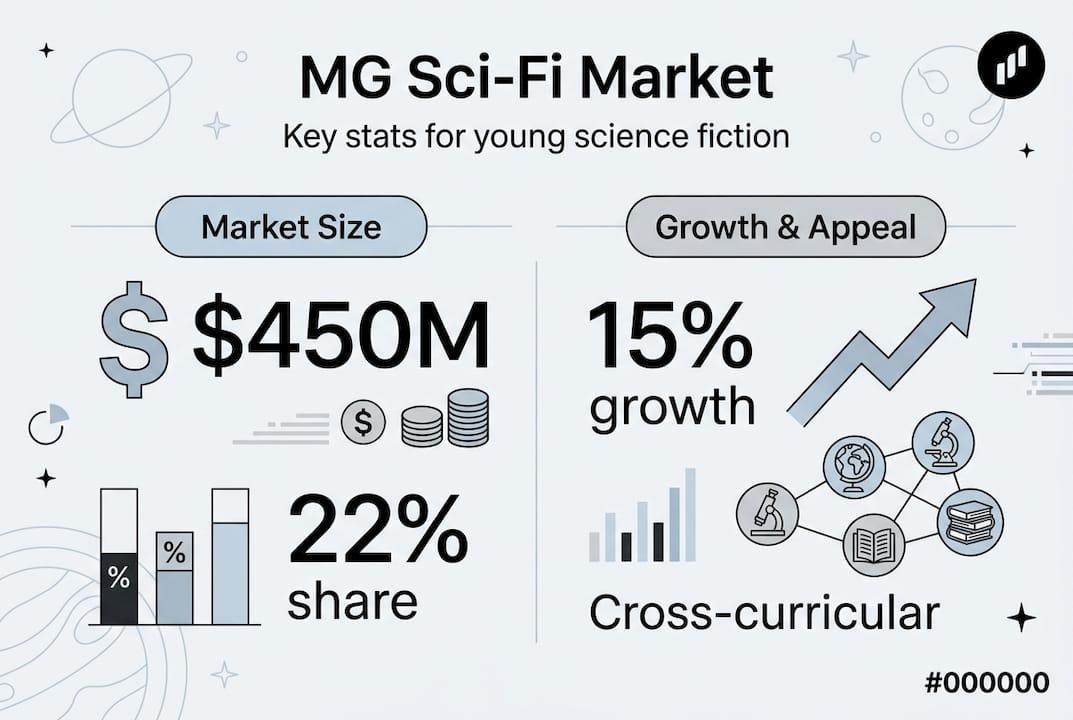
Market robust; prioritize diverse, STEM-infused stories for engagement. Publishers increasingly seek middle grade sci-fi that features protagonists from varied backgrounds and incorporates science, technology, engineering, and math concepts authentically. This shift responds to educator demand for books that support curriculum goals while maintaining entertainment value.
The importance of middle grade literature extends beyond entertainment or education alone. These books serve crucial developmental functions during a formative period:
- Building reading stamina and confidence for longer, more complex texts
- Introducing diverse perspectives and experiences that broaden worldviews
- Providing safe spaces to explore difficult emotions and social situations
- Developing critical thinking through exposure to ethical dilemmas
- Fostering imagination and creative problem solving
For educators, middle grade sci-fi offers cross-curricular opportunities. A single book can support language arts standards while introducing scientific concepts, historical parallels, and social studies themes. The genre's natural inclusion of STEM topics makes it valuable for integrated learning approaches.
| Category | Market share | Growth trend | Key characteristics |
|---|---|---|---|
| Middle grade | 22% children's revenue | 15% growth 2021-2022 | Ages 8-12, educational themes, optimistic |
| Young adult | 28% children's revenue | 8% growth 2021-2022 | Ages 12-18, mature themes, darker tone |
| Picture books | 35% children's revenue | 5% growth 2021-2022 | Ages 0-8, visual storytelling, simple text |
| Early readers | 15% children's revenue | 12% growth 2021-2022 | Ages 5-8, transitional reading, short chapters |
Parents and educators selecting middle grade books should prioritize stories that challenge readers appropriately while maintaining engagement. Look for books with compelling plots, relatable characters facing meaningful obstacles, and themes that spark conversation. The best middle grade sci-fi leaves readers thinking about big questions long after finishing the final page.
Explore engaging middle grade sci-fi with Pafel Dubois
If you're searching for middle grade science fiction that combines thrilling adventure with meaningful social commentary, Pafel Dubois offers stories designed specifically for readers aged 10 to 14. His work demonstrates how sci-fi can entertain while exploring important themes like artificial intelligence, environmental responsibility, and social justice.
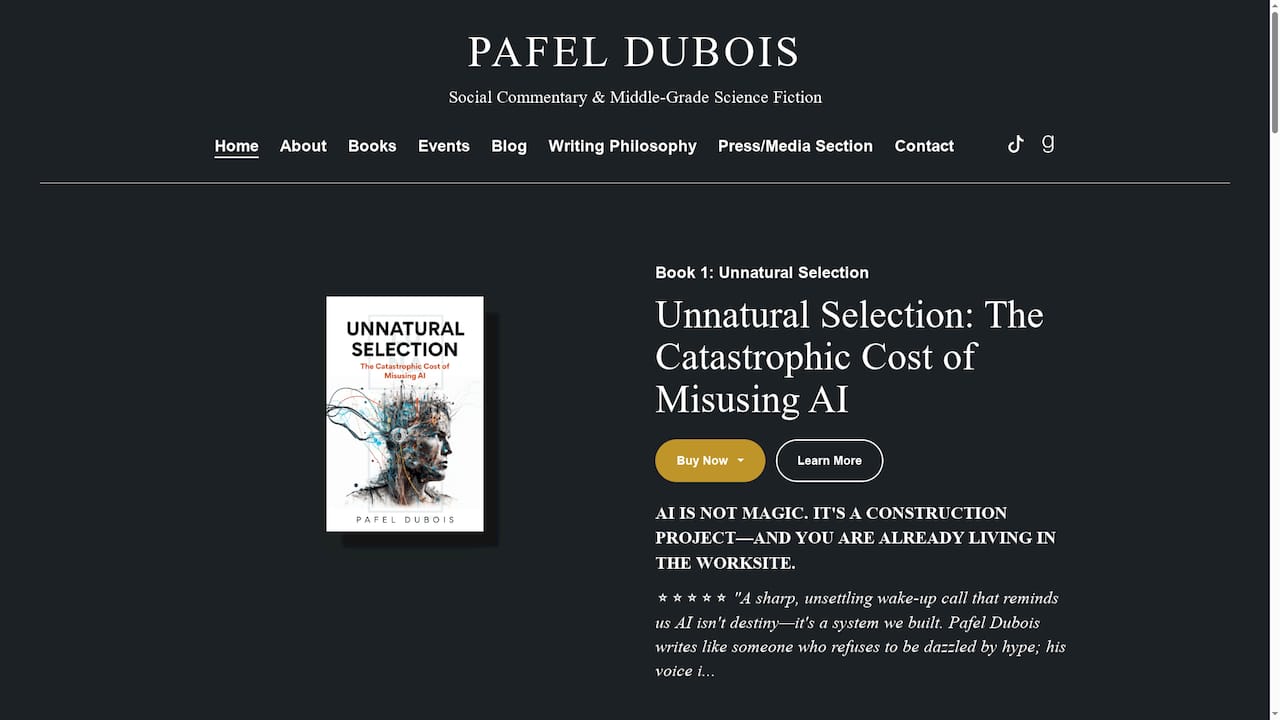
The Spark Chase series delivers upper middle grade space adventure with found family dynamics and age-appropriate complexity. For readers interested in near-future scenarios, Unnatural Selection explores artificial intelligence and its societal implications through accessible storytelling. These books serve as excellent discussion starters for families and classrooms exploring technology, ethics, and what it means to create positive change.
Pro Tip: Use science fiction stories as springboards for family or classroom discussions about real-world issues. Ask readers to identify parallels between the book's fictional world and current events, then brainstorm solutions together.
FAQ
What age group is middle grade literature for?
Middle grade literature targets readers ages 8 to 12, typically covering grades 3 through 7. Protagonists in these stories are usually 10 to 12 years old, allowing readers to identify with characters slightly older than themselves. This age positioning helps young readers aspire to the maturity and capabilities of the heroes they're reading about.
How does middle grade sci-fi differ from young adult science fiction?
Middle grade sci-fi features younger protagonists and uses more accessible language than young adult fiction. The themes remain age-appropriate with generally optimistic or educational tones, while young adult tends toward darker subject matter and moral ambiguity. Middle grade stories resolve with hope and empowerment, whereas young adult may embrace bleaker or more complex endings that reflect the uncertainties of adolescence.
What makes a good middle grade sci-fi book for educators to use?
Effective educational middle grade sci-fi combines an engaging, clear plot with relatable heroes facing meaningful challenges. The Spark Chase space adventure incorporates social themes and educational content naturally within the story. Look for appropriate pacing and vocabulary that challenges without frustrating, plus themes supporting discussion on ethics, environment, and social responsibility.
Where can I find quality middle grade science fiction books?
Bookstores and libraries maintain dedicated children's sections organized by age and genre, making middle grade sci-fi easy to locate. Author websites specializing in middle grade sci-fi provide detailed descriptions and age recommendations for their titles. Literary awards like the Newbery Medal and state reading lists offer curated recommendations from educators and librarians who evaluate books for quality and appropriateness.
Recommended
- Spark Chase : Upper Middle Grade Space Adventure | Found Family Sci-Fi | Ages 10-14 | Pafel Dubois
- Order from anywhere in the world: 🌍 Available in print and digital formats globally 📦 International shipping available 🌐 Find at your local bookstore or online retailer | Pafel Dubois
- Blog | Pafel Dubois
- Unnatural Selection: The Catastrophic Cost of Misusing AI | Pafel Dubois